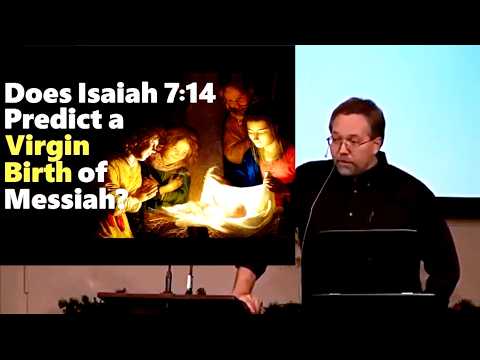
The Bible Didn’t Drop From Heaven — Part 2 | Michael Heiser
John 14:6
apologetics
August 21, 2025
Part 1: https://youtu.be/xACuQzCkYIk
The process of determining the final canon of the Hebrew Bible was a gradual and communal effort rooted in the belief that the Spirit of God would guide the faithful community over time to recognise the inspired texts worthy of preservation. While most books were universally accepted with little dispute, some, like Esther, Song of Solomon, and Ecclesiastes, were debated due to their content or tone. Historical references, such as those to the Great Assembly, a group of Jewish authorities from around 200 BC to 70 AD, reveal that discussions about which books should be included were active but that consensus was typically achieved. By the time of Jesus and the apostles, the Jewish community generally recognised the canon, divided into the Torah, Prophets, and Writings, although differences existed in how books were counted and divided. The Septuagint, a Greek translation of the Hebrew scriptures including additional books not recognised by the Jewish canon, became the Bible of the early Christian church primarily due to its accessibility for Gentile believers who did not read Hebrew or Aramaic.
The textual traditions of the Hebrew Bible before 1947 were limited to medieval manuscripts, notably the Aleppo Codex (10th century AD) and the Leningrad Codex (dated to 1008 AD), which were the primary sources for the Masoretic text. The discovery of the Dead Sea Scrolls in 1947 revolutionised biblical scholarship by unveiling Hebrew manuscripts from the intertestamental period, some dating back to the 2nd century BC. These scrolls demonstrated that at the time of Jesus, there was no single, fixed Hebrew Bible but rather a plurality of textual traditions—including those aligned with the Septuagint, the Masoretic text, and the Samaritan Pentateuch—all used and preserved by Jewish communities. This plurality dispels the myth of a single, unchanging Hebrew Bible circulating from antiquity. Instead, the textual evidence shows diverse versions coexisted until the Masoretic text gained predominance in later centuries, a reality that shaped the Protestant canon at the Reformation, which favored books originally composed in Hebrew over the Septuagint’s additional texts, unlike the Catholic Old Testament which retained those extra books. The Dead Sea Scrolls thus provide crucial insight into the rich, complex history of the Hebrew Bible’s formation and transmission.
#bible #bibleverse #michaelheiser #religion #humanity #text #critical #biblereading #deadseascrolls