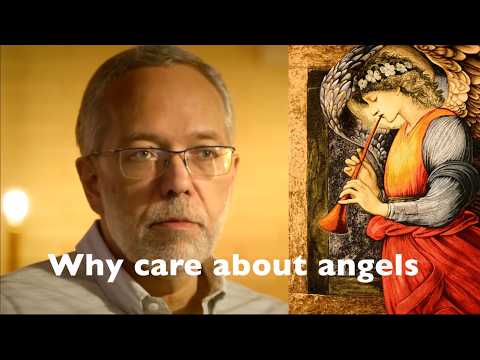
The Virgin Birth Controversy: Mistranslation or Miracle? | Michael Heiser

John 14:6
apologetics
July 21, 2026
Michael Heiser argues that Matthew’s citation of Isaiah 7 is both historically grounded and theologically legitimate: the original prophecy was delivered to King Ahaz in a precise 8th-century BC political crisis, and its immediate purpose was to reassure Ahaz about the survival of the Davidic dynasty, yet the language Isaiah used (including the key term alma) legitimately carried the possibility of a virgin sense in Hebrew and related cultural idioms, so Matthew’s Greek rendering with parthenos need not be dismissed as a simple mistranslation. Heiser demonstrates this by surveying the occurrences of alma and closely related terms across the Hebrew Bible, showing contexts where alma overlaps with words that clearly mark virginity and contexts (like Song of Solomon and Esther) that supply sexual-status nuance; from that evidence he concludes that contemporary readers of Isaiah could have heard a virgin implication alongside other meanings, rather than being forced to see only one narrow sense. He further shows that Emmanuel (“God-with-us”) literally reads as a theologically flexible phrase—grammatically capable of meaning “God is with us,” “a god is with us,” or simply “with us is God”—and that for Ahaz the name would mainly signal divine presence and covenantal preservation for David’s house rather than immediate incarnational claims; nevertheless, the same language carries typological force for later interpreters. Heiser cautions against modern critics who treat Matthew’s use of Isaiah as careless, noting that first-century Jewish readers frequently allowed for fulfillment “by analogy” or typology, where an Old Testament event, person, or institution foreshadows an aspect of Jesus’ life without requiring a word-for-word, one-to-one correspondence; Matthew’s method fits well within those interpretive norms and is therefore best understood as a deliberate theological reading rather than a scholarly blunder. Finally, Heiser ties the pieces together by observing that Matthew had access to family traditions (Mary’s story, the nativity details, and the flight to Egypt) and a strong command of Jewish scripture and interpretive habits, so his application of Isaiah 7 to Jesus is coherent both as literary theology and as a continuation of Israel’s narrative—Isaiah’s near-term sign secures Ahaz’s confidence in God’s promises while simultaneously serving as a typological pointer that Matthew shapes into a christological claim about Jesus as the ultimate fulfillment of God’s presence with his people.
#jesus #gospel #christ #michaelheiser #baptism #jerusalem #satan #cosmic #biblical
https://youtu.be/Pq0gW7ry_6Y
https://youtu.be/PfJnBBtF3vM
https://youtu.be/D9bj3HA-XPA
All rights to this material belong to their respective owners. Direct links to the original videos will always be provided when possible. This video is presented in combined format for ease of viewing and educational purposes. Channel Disclaimer: This channel is not operated by or affiliated with Dr Michael Heiser or his official platforms. Comments here do not reach Michael's team. I'm just a fan who saw a need to share his ideas in bite-sized form and make them more accessible for lay audiences here on YouTube, which I believe aligns with Dr Heiser's mission and honours his legacy. If you feel called to give back, please support the Michael S. Heiser Foundation. By joining the DRMSH Community, you are supporting the Michael S. Heiser Foundation. Your participation makes a real difference! Thank you so much, and let's keep Mike's legacy going!
Scripture
IsaiahIsaiah 7