
Encyclopedia entry
Burial
The first burial we have an account of is that of Sarah (Gen. 23). The first commercial transaction recorded is that of the purchase of a burial-place, for which Abraham weighed to Ephron “four hundred shekels of silver current money with the merchants.” Thus the patriarch became the owner of a part of the land of Canaan, the only part he ever possessed. When he himself died, “his sons Isaac and Ishmael buried him in the cave of Machpelah,” beside Sarah his wife (Gen. 25:9).
Read full account →↑
Deborah, Rebekah’s nurse, was buried under Allon-bachuth, “the oak of weeping” (Gen. 35:8), near to Bethel. Rachel died, and was buried near Ephrath; “and Jacob set a pillar upon her grave” (16-20). Isaac was buried at Hebron, where he had died (27, 29). Jacob, when charging his sons to bury him in the cave of Machpelah, said, “There they buried Abraham and Sarah his wife; there they buried Isaac and Rebekah his wife; and there I buried Leah” (49:31). In compliance with the oath which he made him swear unto him (47:29-31), Joseph, assisted by his brethren, buried Jacob in the cave of Machpelah (50:2, 13). At the Exodus, Moses “took the bones of Joseph with him,” and they were buried in the “parcel of ground” which Jacob had bought of the sons of Hamor (Josh. 24:32), which became Joseph’s inheritance (Gen. 48:22; 1 Chr. 5:1; John 4:5). Two burials are mentioned as having taken place in the wilderness. That of Miriam (Num. 20:1), and that of Moses, “in the land of Moab” (Deut. 34:5, 6, 8). There is no account of the actual burial of Aaron, which probably, however, took place on the summit of Mount Hor (Num. 20:28, 29).
Joshua was buried “in the border of his inheritance in Timnath-serah” (Josh. 24: 30).
In Job we find a reference to burying-places, which were probably the Pyramids (3:14, 15). The Hebrew word for “waste places” here resembles in sound the Egyptian word for “pyramids.”
Samuel, like Moses, was honoured with a national burial (1 Sam. 25:1). Joab (1 Kings 2:34) “was buried in his own house in the wilderness.”
In connection with the burial of Saul and his three sons we meet for the first time with the practice of burning the dead (1 Sam. 31:11-13). The same practice is again referred to by Amos (6:10).
Absalom was buried “in the wood” where he was slain (2 Sam. 18:17, 18). The raising of the heap of stones over his grave was intended to mark abhorrence of the person buried (comp. Josh. 7:26 and 8:29). There was no fixed royal burying-place for the Hebrew kings. We find several royal burials taking place, however, “in the city of David” (1 Kings 2:10; 11:43; 15:8; 2 Kings 14:19, 20; 15:38; 1 Kings 14:31; 22:50; 2 Chr. 21:19, 20; 2 Chr. 24:25, etc.). Hezekiah was buried in the mount of the sepulchres of the sons of David; “and all Judah and the inhabitants of Jerusalem did him honour at his death” (2 Chr. 32:33).
Little is said regarding the burial of the kings of Israel. Some of them were buried in Samaria, the capital of their kingdom (2 Kings 10:35; 13:9; 14:16).
Our Lord was buried in a new tomb, hewn out of the rock, which Joseph of Arimathea had prepared for himself (Matt. 27:57-60; Mark 15:46; John 19:41, 42).
The grave of Lazarus was “a cave, and a stone lay on it” (John 11:38). Graves were frequently either natural caverns or artificial excavations formed in the sides of rocks (Gen. 23:9; Matt. 27:60); and coffins were seldom used, unless when the body was brought from a distance.
In the Bible
20
Verses where Burial is named. Berean Standard Bible (public domain).
- 1 Kings 14:13
All Israel will mourn for him and bury him. For this is the only one belonging to Jeroboam who will receive a proper burial, because only in him has the LORD, the God of Israel, found any good in the house of Jeroboam.
- 2 Chronicles 26:23
And Uzziah rested with his fathers and was buried near them in a field of burial that belonged to the kings, for the people said, “He was a leper.” And his son Jotham reigned in his place.
- Acts 8:2
God-fearing men buried Stephen and mourned deeply over him.
- Ecclesiastes 6:3
A man may father a hundred children and live for many years; yet no matter how long he lives, if he is unsatisfied with his prosperity and does not even receive a proper burial, I say that a stillborn child is better off than he.
- Ecclesiastes 8:10
Then too, I saw the burial of the wicked who used to go in and out of the holy place, and they were praised in the city where they had done so. This too is futile.
- Ezekiel 29:5
I will leave you in the desert, you and all the fish of your streams. You will fall on the open field and will not be taken away or gathered for burial. I have given you as food to the beasts of the earth and the birds of the air.
+14 more verses naming Burial.
Scripture on Burial
38
See all 38 +−
- 1 Kings 14John 19Genesis 25Genesis 35Genesis 48Genesis 49Genesis 50Deuteronomy 34Joshua 71 Samuel 251 Samuel 312 Samuel 182 Kings 102 Kings 141 Chronicles 52 Chronicles 212 Chronicles 242 Chronicles 262 Chronicles 32Ecclesiastes 6Ecclesiastes 8Isaiah 14Jeremiah 22Jeremiah 26Ezekiel 29Ezekiel 39Matthew 26Mark 14Mark 15John 4John 11John 12Acts 8
Burial references
38
Voices on Burial
15
Surfaced by name match — accuracy varies by title clarity.




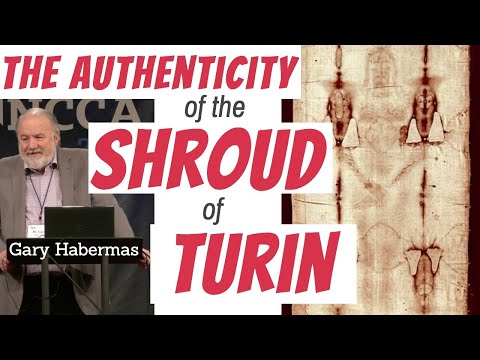







![[PODCAST] Is the Shroud of Turin the Burial Cloth of Christ? with @garyhabermas1473](https://i.ytimg.com/vi/rxB0MgkBnwI/hqdefault.jpg)














Sources · Easton's Bible Dictionary (1897)
Public-domain text. Modernized only where archaic spelling impedes reading; original facts preserved. Verify against an authoritative modern reference before quoting.