Encyclopedia entry · Person
Leah
Curator's research file
Subject · person

Leah
Tissot Rachel and Leah · James Tissot
Identity
- Name meaning
- weary; tired
Family
- Parent(s)
- —
- Spouse
- —
- Children
- —
- Tribe / people
- —
Era & origin
- Era
- Patriarchal Age (c. 1720 BC)
- Region
- —
- Contemporary of
- —
Role
- Role
- First wife of Jacob; mother of six sons and one daughter; matriarch of Israel
- Notable for
- Leah was the eldest daughter of Laban and first wife of Jacob.
Scripture
- First mention
- Genesis 29:16-17
- Most cited
- Genesis 29
Network
- Referenced by
- 17 entries
- Voices
- —
Her Marriage to Jacob
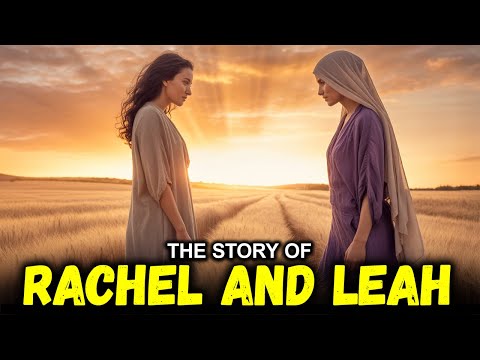
Leah is first introduced as Laban's "elder daughter" with "tender eyes" (Genesis 29:16-17), in contrast to Rachel's beauty. When Jacob, after fourteen years of service, prepared to marry Rachel, Laban deceived him by substituting Leah on the wedding night (Genesis 29:23). To excuse himself, Laban claimed local custom forbade marrying off the younger daughter first. Jacob completed the marriage week with Leah and married Rachel a week later, though his preference for Rachel persisted.
Mother of Jacob's Sons
Leah bore Jacob children in rapid succession while Rachel remained childless. She gave birth to *Reuben, Simeon, Levi, and Judah* (Genesis 29:32-35), and later to *Issachar and Zebulun* (Genesis 30:17-20). She also bore *Dinah*, Jacob's only daughter mentioned by name (Genesis 30:21). Her sons would become the founders of six of the twelve tribes of Israel, including Judah, from whose line King David would eventually descend.
Later Life and Legacy
Leah accompanied Jacob when he departed Laban's household and traveled to Canaan (Genesis 31). She died in the land of Canaan, before Jacob's family moved to Egypt, and was *buried in the cave of Machpelah near Hebron* (Genesis 49:31), the family burial place. Though Jacob's emotional preference always favored Rachel, Leah's fertility and the significance of her descendants—particularly the tribes of Judah and Levi—secured her place as a matriarch of Israel.
Key passages
See also
Source · AI-drafted from public-domain sources (Smith's 1884, Easton's 1897), synthesized + modernized; auto-verified for fidelity. Final gospel.bot review recommended.