
Encyclopedia entry
Abel
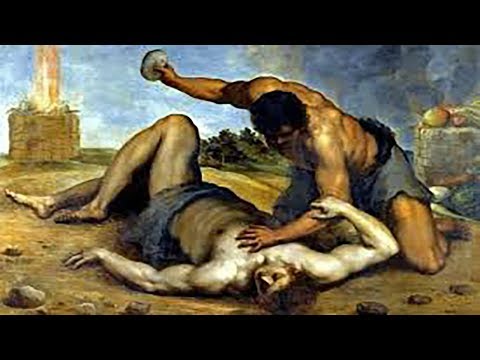
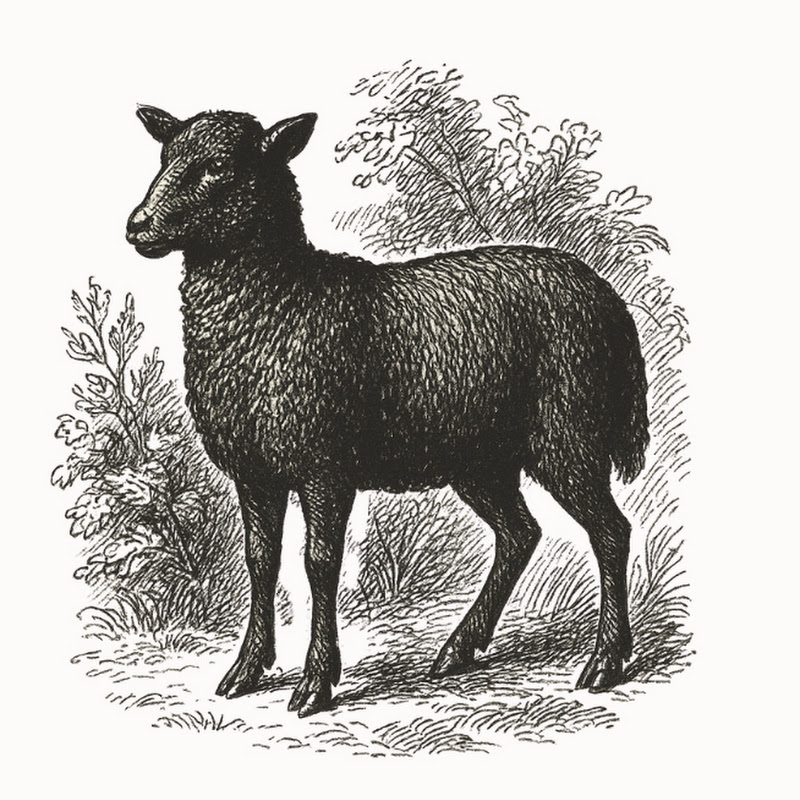
(Heb. Hebhel), a breath, or vanity, the second son of Adam and Eve. He was put to death by his brother Cain (Gen. 4:1-16). Guided by the instruction of their father, the two brothers were trained in the duty of worshipping God. “And in process of time” (marg. “at the end of days”, i.e., on the Sabbath) each of them offered up to God of the first-fruits of his labours. Cain, as a husbandman, offered the fruits of the field; Abel, as a shepherd, of the firstlings of his flock. “The Lord had respect unto Abel and his offering; but unto Cain and his offering he had not respect” (Gen. 4:3-5). On this account Cain was angry with his brother, and formed the design of putting him to death; a design which he at length found an opportunity of carrying into effect (Gen. 4:8, 9. Comp. 1 John 3:12). There are several references to Abel in the New Testament. Our Saviour speaks of him as “righteous” (Matt. 23:35). “The blood of sprinkling” is said to speak “better things than that of Abel” (Heb. 12:24); i.e., the blood of Jesus is the reality of which the blood of the offering made by Abel was only the type. The comparison here is between the sacrifice offered by Christ and that offered by Abel, and not between the blood of Christ calling for mercy and the blood of the murdered Abel calling for vengeance, as has sometimes been supposed. It is also said (Heb. 11:4) that “Abel offered unto God a more excellent sacrifice than Cain.” This sacrifice was made “by faith;” this faith rested in God, not only as the Creator and the God of providence, but especially in God as the great Redeemer, whose sacrifice was typified by the sacrifices which, no doubt by the divine institution, were offered from the days of Adam downward. On account of that “faith” which looked forward to the great atoning sacrifice, Abel’s offering was accepted of God. Cain’s offering had no such reference, and therefore was rejected. Abel was the first martyr, as he was the first of our race to die.
Read full account →↑
Abel (Heb. ‘abhel), lamentation (1 Sam. 6:18), the name given to the great stone in Joshua’s field whereon the ark was “set down.” The Revised Version, however, following the Targum and the LXX., reads in the Hebrew text ’ebhen (= a stone), and accordingly translates “unto the great stone, whereon they set down the ark.” This reading is to be preferred.
Abel (Heb. ‘abhel), a grassy place, a meadow. This word enters into the composition of the following words:
Also from Smith's (1884) +−
the name of several places in Palestine, probably signifies a meadow .
(i.e., breath, vapor, transitoriness, probably so called from the shortness of his life), the second son of Adam, murdered by his brother Cain, (Genesis 4:1-16) he was a keeper or feeder of sheep. Our Lord spoke of Abel as the first martyr, (Matthew 23:35) so did the early Church subsequently. The traditional site of his murder and his grave are pointed out near Damascus.
In the Bible
22
Verses where Abel is named. Berean Standard Bible (public domain).
- 1 Kings 4:12
Baana son of Ahilud in Taanach, in Megiddo, and in all of Beth-shean next to Zarethan below Jezreel, from Beth-shean to Abel-meholah and on past Jokmeam;
- 1 Kings 15:20
And Ben-hadad listened to King Asa and sent the commanders of his armies against the cities of Israel, conquering Ijon, Dan, Abel-beth-maacah, and the whole land of Naphtali, including the region of Chinnereth.
- 1 Kings 19:16
You are also to anoint Jehu son of Nimshi as king over Israel and Elisha son of Shaphat from Abel-meholah to succeed you as prophet.
- 1 Samuel 6:18
The number of gold rats also corresponded to the number of Philistine cities belonging to the five rulers—the fortified cities and their outlying villages. And the large rock on which they placed the ark of the LORD stands to this day in the field of Joshua of Beth-shemesh.
- 2 Chronicles 16:4
And Ben-hadad listened to King Asa and sent the commanders of his armies against the cities of Israel, conquering Ijon, Dan, Abel-maim, and all the store cities of Naphtali.
- 2 Kings 15:29
In the days of Pekah king of Israel, Tiglath-pileser king of Assyria came and captured Ijon, Abel-beth-maacah, Janoah, Kedesh, Hazor, Gilead, and Galilee, including all the land of Naphtali, and he took the people as captives to Assyria.
+16 more verses naming Abel.
Scripture on Abel
17
Entries that reference Abel
20
Abel references
18
More illustrations of Abel
1
_%E2%80%A2_invenit_James_Tissot_%E2%80%A2_pinxit_James_Tissot_%E2%80%A2_excudit_Maurice_de_Brunoff_apud_Philip_de_Vere_%E2%80%A2_praesentat_Phillip_Medhurst..jpg)
Voices on Abel
24
Surfaced by name match — accuracy varies by title clarity.























Sources · Hitchcock's Bible Names (1869) · Easton's Bible Dictionary (1897) · Smith's Bible Dictionary (1884)
Public-domain text. Modernized only where archaic spelling impedes reading; original facts preserved. Verify against an authoritative modern reference before quoting.