
Encyclopedia entry
Damascus
Activity, the most ancient of Oriental cities; the capital of Syria (Isa. 7:8; 17:3); situated about 133 miles to the north of Jerusalem. Its modern name is Esh-Sham; i.e., “the East.”
Read full account →↑
The situation of this city is said to be the most beautiful of all Western Asia. It is mentioned among the conquests of the Egyptian king Thothmes III. (B.C. 1500), and in the Amarna tablets (B.C. 1400).
It is first mentioned in Scripture in connection with Abraham’s victory over the confederate kings under Chedorlaomer (Gen. 14:15). It was the native place of Abraham’s steward (15:2). It is not again noticed till the time of David, when “the Syrians of Damascus came to succour Hadadezer” (q.v.), 2 Sam. 8:5; 1 Chr. 18:5. In the reign of Solomon, Rezon became leader of a band who revolted from Hadadezer (1 Kings 11:23), and betaking themselves to Damascus, settled there and made their leader king. There was a long war, with varying success, between the Israelites and Syrians, who at a later period became allies of Israel against Judah (2 Kings 15:37).
The Syrians were at length subdued by the Assyrians, the city of Damascus was taken and destroyed, and the inhabitants carried captive into Assyria (2 Kings 16:7-9; comp. Isa. 7:8). In this, prophecy was fulfilled (Isa. 17:1; Amos 1:4; Jer. 49:24). The kingdom of Syria remained a province of Assyria till the capture of Nineveh by the Medes (B.C. 625), when it fell under the conquerors. After passing through various vicissitudes, Syria was invaded by the Romans (B.C. 64), and Damascus became the seat of the government of the province. In A.D. 37 Aretas, the king of Arabia, became master of Damascus, having driven back Herod Antipas.
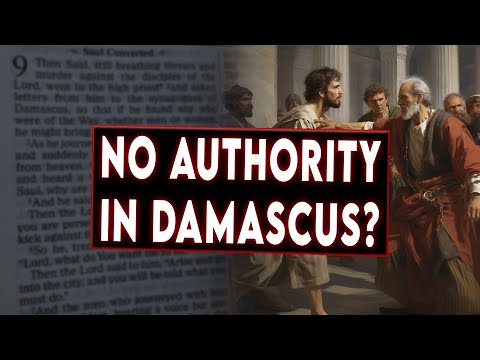
This city is memorable as the scene of Saul’s conversion (Acts 9:1-25). The street called “Straight,” in which Judas lived, in whose house Saul was found by Ananias, is known by the name Sultany, or “Queen’s Street.” It is the principal street of the city. Paul visited Damascus again on his return from Arabia (Gal. 1:16, 17). Christianity was planted here as a centre (Acts 9:20), from which it spread to the surrounding regions.
In A.D. 634 Damascus was conquered by the growing Mohammedan power. In A.D. 1516 it fell under the dominion of the Turks, its present rulers. It is now the largest city in Asiatic Turkey. Christianity has again found a firm footing within its walls.
Also from Smith's (1884) +−
one of the most ancient and most important of the cities of Syria. It is situated 130 miles northeast of Jerusalem, in a plain of vast size and of extreme fertility, which lies east of the great chain of Anti-Libanus, on the edge of the desert. This fertile plain, which is nearly circular and about 30 miles in diameter, is due to the river Barada, which is probably the “Abana” of Scripture. Two other streams the Wady Helbon upon the north and the Awaj, which flows direct from Hermon upon the south, increase the fertility of the Damascene plain, and contend for the honor of representing the “Pharpar” of Scripture. According to Josephus, Damascus was founded by Uz grandson of Shem. It is first mentioned in Scripture in connection with Abraham, (Genesis 14:15) whose steward was a native of the place. (Genesis 15:2) At one time david became complete master of the whole territory, which he garrisoned with israelites. (2 Samuel 8:5,6) It was in league with Baasha, king of Israel against Asa, (1 Kings 15:19; 2 Chronicles 16:3) and afterwards in league with Asa against Baasha. (1 Kings 15:20) Under Ahaz it was taken by Tiglath-pileser, (2 Kings 16:7,8,9) the kingdom of Damascus brought to an end, and the city itself destroyed, the inhabitants being carried captive into Assyria. (2 Kings 16:9) comp. Isai 7:8 and Amos 1:5 Afterwards it passed successively under the dominion of the Assyrians, Babylonians, Persians, Macedonians, Romans and Saracens, and was at last captured by the Turks in 1516 A.D. Here the apostle Paul was converted and preached the gospel. (Acts 9:1-25) Damascus has always been a great centre for trade. Its present population is from 100,000 to 150,000. It has a delightful climate. Certain localities are shown as the site of those scriptural events which specially interest us in its history. Queen’s Street, which runs straight through the city from east to west, may be the street called Straight. (Acts 9:11) The house of Judas and that of Ananias are shown, but little confidence can be placed in any of these traditions.
In the Bible
56
Verses where Damascus is named. Berean Standard Bible (public domain).
- 1 Chronicles 18:5
When the Arameans of Damascus came to help King Hadadezer of Zobah, David struck down twenty-two thousand of their men.
- 1 Chronicles 18:6
Then he placed garrisons in Aram of Damascus, and the Arameans became subject to David and brought him tribute. So the LORD made David victorious wherever he went.
- 1 Kings 11:24
and had gathered men to himself. When David killed the Zobaites, Rezon captained a band of raiders and went to Damascus, where they settled and gained control.
- 1 Kings 15:18
So Asa withdrew all the silver and gold that remained in the treasuries of the house of the LORD and the royal palace. He entrusted it to his servants and sent them with this message to Ben-hadad son of Tabrimmon, the son of Hezion, the king of Aram, who was ruling in Damascus:
- 1 Kings 19:15
Then the LORD said to him, “Go back by the way you came, and go to the Desert of Damascus. When you arrive, you are to anoint Hazael as king over Aram.
- 1 Kings 20:34
Ben-hadad said to him, “I will restore the cities my father took from your father; you may set up your own marketplaces in Damascus, as my father did in Samaria.” “By this treaty I release you,” Ahab replied. So he made a treaty with him and sent him away.
+50 more verses naming Damascus.
Scripture on Damascus
34
See all 34 +−
- Acts 22Genesis 141 Kings 151 Chronicles 18Isaiah 7Isaiah 17Ezekiel 47Genesis 151 Kings 112 Kings 82 Chronicles 162 Chronicles 28Acts 26Galatians 11 Kings 191 Kings 202 Kings 52 Kings 142 Kings 152 Chronicles 24Song of Solomon 7Isaiah 8Isaiah 10Ezekiel 27Ezekiel 48Amos 3Amos 5Zechariah 92 Corinthians 11
Entries that reference Damascus
87
See all 87 +−
- PaulAbelAbileneAhabAhavaAhazAhaziahAmanaAnaniasAphikAramAretasArgobArpadArpad, Or ArphadAsaAshteroth KarnaimAssyriaAvenBaalbecBaashaBenhadadBerothahBeth-sheanCapernaumCityCoelesyriaDecapolisDoveEdenElijahEphraim, Gate ofHadadezerHadrachHamathHazaelHazar-enanHebrew languageHebronHelbonHittitesHobahIsrael, Kingdom ofIturaeaJehoahazJeroboamJudah, Kingdom ofJudasKirLysaniasMaher-shalal-hash-bazMahershalalhashbazMearahNaamanNazarethPalestina And PalestinePannagPekahPharparRamath-mizpehRamothgileadResurrection of ChristRezinRezonRoseSelaSilkSnowStreetSyriaTadmorTemaTiglath-Pileser III.TiglathpileserTombTombsTyreUrijahWindowWoolZabadeansZoba, Or Zobah
Damascus references
39
Voices on Damascus
4
Surfaced by name match — accuracy varies by title clarity.

![MHMD [13] Do John of Damascus & the Chinese know more about the MHMDs?](https://i.ytimg.com/vi/h6f_yRUL13M/hqdefault.jpg)



Sources · Hitchcock's Bible Names (1869) · Easton's Bible Dictionary (1897) · Smith's Bible Dictionary (1884)
Public-domain text. Modernized only where archaic spelling impedes reading; original facts preserved. Verify against an authoritative modern reference before quoting.