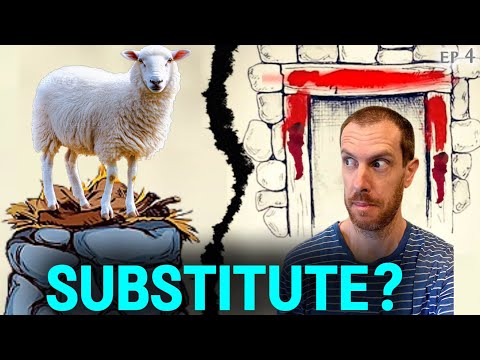
Why Translators Changed Their Minds About Atonement

Leviticus is Fun
teaching
July 2, 2026
scholars have never quite agreed on what that word kippur actually means.
We read it in English as atonement, and scholars used to be pretty confident kippur meant to cover. That is until they discovered some ancient Assyrian tablets, describing their elimination rituals, and these Assyrian rituals contained a word that shares the same root as kippur. And this forced scholars to reconsider what kippur meant.
What the scapegoat does on the day of atonement is known as an elimination ritual.
Ancient Hittites and Babylonians had these kinds of rituals too.
An elimination ritual is an ancient way of removing — or eliminating — some kind of evil or disease or impurity, normally via a live animal that acts as a kind of HAZMAT courier.
Leviticus 16 describes how all of Israel's sin is piled onto a live goat that’s sent out into the wilderness carrying away their impurity. Or eliminating it. This process is what the Bible calls kippur. or the day of Kippur, day of atonement.
There’s another elimination ritual in the Bible in Leviticus chapter 14. In this elimination ritual a live bird acts as the courier, carrying away impurity. From a house.
Leviticus 14 says the priest “is to release the live bird into the open field outside the city. In this way he will kippur the house, and it will be clean.” (v53)
Why does Leviticus 14 describe this action as kippur? That’s today’s focus.
#bible #theology #christianyoutube #youtuber #leviticus
Scripture
LeviticusLeviticus 16Leviticus 14
Topics
hittitebabylonianninevehnineveh libraryscapegoatkippuryom kippurday of atonementleviticusleviticus 14