
Encyclopedia entry
Prayer
Is converse with God; the intercourse of the soul with God, not in contemplation or meditation, but in direct address to him. Prayer may be oral or mental, occasional or constant, ejaculatory or formal. It is a “beseeching the Lord” (Ex. 32:11); “pouring out the soul before the Lord” (1 Sam. 1:15); “praying and crying to heaven” (2 Chr. 32:20); “seeking unto God and making supplication” (Job 8:5); “drawing near to God” (Ps. 73:28); “bowing the knees” (Eph. 3:14).
Read full account →↑
Prayer presupposes a belief in the personality of God, his ability and willingness to hold intercourse with us, his personal control of all things and of all his creatures and all their actions.
Acceptable prayer must be sincere (Heb. 10:22), offered with reverence and godly fear, with a humble sense of our own insignificance as creatures and of our own unworthiness as sinners, with earnest importunity, and with unhesitating submission to the divine will. Prayer must also be offered in the faith that God is, and is the hearer and answerer of prayer, and that he will fulfil his word, “Ask, and ye shall receive” (Matt. 7:7, 8; 21:22; Mark 11:24; John 14:13, 14), and in the name of Christ (16:23, 24; 15:16; Eph. 2:18; 5:20; Col. 3:17; 1 Pet. 2:5).
Prayer is of different kinds, secret (Matt. 6:6); social, as family prayers, and in social worship; and public, in the service of the sanctuary.
Intercessory prayer is enjoined (Num. 6:23; Job 42:8; Isa. 62:6; Ps. 122:6; 1 Tim. 2:1; James 5:14), and there are many instances on record of answers having been given to such prayers, e.g., of Abraham (Gen. 17:18, 20; 18:23-32; 20:7, 17, 18), of Moses for Pharaoh (Ex. 8:12, 13, 30, 31; Ex. 9:33), for the Israelites (Ex. 17:11, 13; 32:11-14, 31-34; Num. 21:7, 8; Deut. 9:18, 19, 25), for Miriam (Num. 12:13), for Aaron (Deut. 9:20), of Samuel (1 Sam. 7:5-12), of Solomon (1 Kings 8; 2 Chr. 6), Elijah (1 Kings 17:20-23), Elisha (2 Kings 4:33-36), Isaiah (2 Kings 19), Jeremiah (42:2-10), Peter (Acts 9:40), the church (12:5-12), Paul (28:8).
No rules are anywhere in Scripture laid down for the manner of prayer or the attitude to be assumed by the suppliant. There is mention made of kneeling in prayer (1 Kings 8:54; 2 Chr. 6:13; Ps. 95:6; Isa. 45:23; Luke 22:41; Acts 7:60; 9:40; Eph. 3:14, etc.); of bowing and falling prostrate (Gen. 24:26, 52; Ex. 4:31; 12:27; Matt. 26:39; Mark 14:35, etc.); of spreading out the hands (1 Kings 8:22, 38, 54; Ps. 28:2; 63:4; 88:9; 1 Tim. 2:8, etc.); and of standing (1 Sam. 1:26; 1 Kings 8:14, 55; 2 Chr. 20:9; Mark 11:25; Luke 18:11, 13).
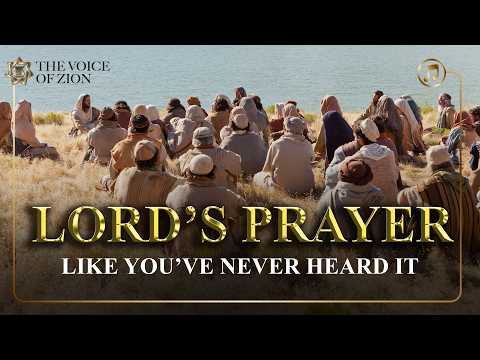
If we except the “Lord’s Prayer” (Matt. 6:9-13), which is, however, rather a model or pattern of prayer than a set prayer to be offered up, we have no special form of prayer for general use given us in Scripture.
Prayer is frequently enjoined in Scripture (Ex. 22:23, 27; 1 Kings 3:5; 2 Chr. 7:14; Ps. 37:4; Isa. 55:6; Joel 2:32; Ezek. 36:37, etc.), and we have very many testimonies that it has been answered (Ps. 3:4; 4:1; 6:8; 18:6; 28:6; 30:2; 34:4; 118:5; James 5:16-18, etc.).
“Abraham’s servant prayed to God, and God directed him to the person who should be wife to his master’s son and heir (Gen. 24:10-20).
“Jacob prayed to God, and God inclined the heart of his irritated brother, so that they met in peace and friendship (Gen. 32:24-30; 33:1-4).
“Samson prayed to God, and God showed him a well where he quenched his burning thirst, and so lived to judge Israel (Judg. 15:18-20).
“David prayed, and God defeated the counsel of Ahithophel (2 Sam. 15:31; 16:20-23; 17:14-23).
“Daniel prayed, and God enabled him both to tell Nebuchadnezzar his dream and to give the interpretation of it (Dan. 2: 16-23).
“Nehemiah prayed, and God inclined the heart of the king of Persia to grant him leave of absence to visit and rebuild Jerusalem (Neh. 1:11; 2:1-6).
“Esther and Mordecai prayed, and God defeated the purpose of Haman, and saved the Jews from destruction (Esther 4:15-17; 6:7, 8).
“The believers in Jerusalem prayed, and God opened the prison doors and set Peter at liberty, when Herod had resolved upon his death (Acts 12:1-12).
“Paul prayed that the thorn in the flesh might be removed, and his prayer brought a large increase of spiritual strength, while the thorn perhaps remained (2 Cor. 12:7-10).
“Prayer is like the dove that Noah sent forth, which blessed him not only when it returned with an olive-leaf in its mouth, but when it never returned at all.”, Robinson’s Job.
Also from Smith's (1884) +−
The object of this article will be to touch briefly on—
The doctrine of Scripture as to the nature and efficacy of prayer; Its directions as to time, place and manner of prayer; Its types and examples of prayer. Scripture does not give any theoretical explanation of the mystery which attaches to prayer. The difficulty of understanding real efficacy arises chiefly from two sources: from the belief that man lives under general laws, which in all cases must be fulfilled unalterably; and the opposing belief that he is master of his own destiny, and need pray for no external blessing. Now, Scripture, while, by the doctrine of spiritual influence it entirely disposes of the latter difficulty, does not so entirely solve that part of the mystery which depends on the nature of God. It places it clearly before us, and emphasizes most strongly those doctrines on which the difficulty turns. Yet while this is so, on the other hand the instinct of prayer is solemnly sanctioned and enforced on every page. Not only is its subjective effect asserted, but its real objective efficacy, as a means appointed by God for obtaining blessing, is both implied and expressed in the plainest terms. Thus, as usual in the case of such mysteries, the two apparently opposite truths are emphasized, because they are needful: to man’s conception of his relation to God; their reconcilement is not, perhaps cannot be, fully revealed. For, in fact, it is involved in that inscrutable mystery which attends on the conception of any free action of man as necessary for the working out of the general laws of God’s unchangeable will. At the same time it is clearly implied that such a reconcilement exists, and that all the apparently isolated and independent exertions of man’s spirit in prayer are in some way perfectly subordinated to the one supreme will of God, so as to form a part of his scheme of providence. It is also implied that the key to the mystery lies in the fact of man’s spiritual unity with God in Christ, and of the consequent gift of the Holy Spirit. So also is it said of the spiritual influence of the Holy Ghost on each individual mind that while “we know not what to pray for, “the indwelling” Spirit makes intercession for the saints, according to the will of God.” (Romans 8:26,27) Here, as probably in still other cases, the action of the Holy Spirit on the soul is to free agents what the laws of nature are to things inanimate, and is the power which harmonizes free individual action with the universal will of God. There are no directions as to prayer given in the Mosaic law: the duty is rather taken for granted, as an adjunct to sacrifice, than enforced or elaborated. It is hardly conceivable that, even from the beginning public prayer did not follow every public sacrifice. Such a practice is alluded to in (Luke 1:10) as common; and in one instance, at the offering of the first-fruits, it was ordained in a striking form. (26:12-15) In later times it certainly grew into a regular service both in the temple and in the synagogue. But, besides this public prayer, it was the custom of all at Jerusalem to go up to the temple, at regular hours if possible, for private prayer, see (Luke 18:10; Acts 3:1) and those who were absent were wont to “open their windows toward Jerusalem,” and pray “toward” the place of God’s presence. (1 Kings 8:46-49; Psalms 5:7; 28:2; 138:2; Daniel 6:10) The regular hours of prayer seem to have been three (see) (Psalms 55:17; Daniel 6:10) “the evening,” that is the ninth hour (Acts 3:1; 10:3) the hour of the evening sacrifice, (Daniel 9:21) the “morning,” that is, the third hour (Acts 2:15) that of the morning sacrifice; and the sixth hour, or “noonday.” Grace before meat would seem to have been a common practice. See (Matthew 15:36; Acts 27:35) The posture of prayer among the Jews seems to have been most often standing, (1 Samuel 1:26; Matthew 6:5; Mark 11:25; Luke 18:11) unless the prayer were offered with especial solemnity and humiliation, which was naturally expressed by kneeling, (1 Kings 8:54) comp. 2Chr 6:13; Ezra 9:5; Psal 95:8; Dani 6:10 Or prostration. (Joshua 7:6; 1 Kings 18:42; Nehemiah 8:6) The only form of prayer given for perpetual use in the Old Testament is the one in (26:5-15) connected with the offering of tithes and first-fruits, and containing in simple form the important elements of prayer, acknowledgment of God’s mercy, self-dedication and prayer for future blessing. To this may perhaps be added the threefold blessing of (Numbers 6:24-26) couched as it is in a precatory form, and the short prayer of Moses, (Numbers 10:35,36) at the moving and resting of the cloud the former of which was the germ of the 68th Psalm. But of the prayers recorded in the Old Testament the two most remarkable are those of Solomon at the dedication of the temple, (1 Kings 8:23-58) and of Joshua the high priest, and his colleagues, after the captivity. (Nehemiah 9:5-38) It appears from the question of the disciples in (Luke 11:1) and from Jewish tradition, that the chief teachers of the day gave special forms of prayer to their disciples as the badge of their discipleship and the best fruits of their learning. All Christian prayer is, of course, based on the Lord’s Prayer; but its spirit is also guided by that of his prayer in Gethsemane and of the prayer recorded by St. John, (John 17:1) ... the beginning of Christ’s great work of intercession. The influence of these prayers is more distinctly traced in the prayers contained in the epistles, see (Romans 16:25-27; Ephesians 3:14-21; Philemon 1:3-11; Colossians 1:9-15; Hebrews 13:20,21; 1 Peter 5:10,11) etc., than in those recorded in the Acts. The public prayer probably in the first instance took much of its form and style from the prayers of the synagogues. In the record on prayer accepted and granted by God, we observe, as always, a special adaptation to the period of his dispensation to which they belong. In the patriarchal period, they have the simple and childlike tone of domestic application for the ordinary and apparently trivial incidents of domestic life. In the Mosaic period they assume a more solemn tone and a national bearing, chiefly that of direct intercession for the chosen people. More rarely are they for individuals. A special class are those which precede and refer to the exercise of miraculous power. In the New Testament they have a more directly spiritual hearing. It would seem the intention of Holy Scripture to encourage all prayer more especially intercession, in all relations and for all righteous objects.
In the Bible
117
Verses where Prayer is named. Berean Standard Bible (public domain).
- 1 Corinthians 7:5
Do not deprive each other, except by mutual consent and for a time, so you may devote yourselves to prayer. Then come together again, so that Satan will not tempt you through your lack of self-control.
- 1 Kings 8:28
Yet regard the prayer and plea of Your servant, O LORD my God, so that You may hear the cry and the prayer that Your servant is praying before You today.
- 1 Kings 8:29
May Your eyes be open toward this temple night and day, toward the place of which You said, ‘My Name shall be there,’ so that You may hear the prayer that Your servant prays toward this place.
- 1 Kings 8:38
then may whatever prayer or petition Your people Israel make—each knowing his own afflictions and spreading out his hands toward this temple—
- 1 Kings 8:45
then may You hear from heaven their prayer and their plea, and may You uphold their cause.
- 1 Kings 8:49
then may You hear from heaven, Your dwelling place, their prayer and petition, and may You uphold their cause.
+111 more verses naming Prayer.
Scripture on Prayer
152
See all 152 +−
- 1 Samuel 12 Kings 192 Chronicles 7Nehemiah 1Job 42Matthew 6Luke 18Acts 3Ephesians 3Philippians 1Genesis 24Numbers 6Deuteronomy 92 Chronicles 322 Chronicles 33Psalms 5Psalms 55Psalms 66Psalms 88Psalms 102Psalms 109Psalms 141Proverbs 15Lamentations 3Daniel 6Matthew 21Luke 1Luke 22Acts 2Acts 12Acts 16Colossians 41 Timothy 2Genesis 17Genesis 25Genesis 32Exodus 4Exodus 8Exodus 9Exodus 17Exodus 22Exodus 32Numbers 10Numbers 12Numbers 21Joshua 7Judges 151 Samuel 72 Samuel 72 Samuel 151 Kings 31 Kings 91 Kings 171 Kings 182 Kings 42 Kings 202 Chronicles 202 Chronicles 30Ezra 9Nehemiah 4Nehemiah 8Nehemiah 9Nehemiah 11Esther 4Job 8Job 15Job 16Job 22Psalms 3Psalms 4Psalms 6Psalms 17Psalms 28Psalms 35Psalms 37Psalms 39Psalms 42Psalms 54Psalms 61Psalms 64Psalms 65Psalms 69Psalms 72Psalms 73Psalms 80Psalms 84Psalms 86Psalms 95Psalms 122Psalms 143Proverbs 28Isaiah 1Isaiah 26Isaiah 37Isaiah 38Isaiah 45Isaiah 55Isaiah 56Isaiah 62Jeremiah 7Jeremiah 11Ezekiel 36Daniel 2Joel 2Jonah 2Habakkuk 3Zechariah 12Matthew 7Matthew 15Matthew 17Matthew 23Matthew 26Mark 9Mark 14Luke 6Luke 11Luke 19John 14John 17Acts 1Acts 6Acts 7Acts 9Acts 10Acts 27Romans 8Romans 10Romans 12Romans 161 Corinthians 72 Corinthians 12 Corinthians 92 Corinthians 122 Corinthians 13Ephesians 2Ephesians 6Philippians 4Colossians 1Colossians 31 Timothy 4Philemon 1Hebrews 10Hebrews 131 Peter 21 Peter 31 Peter 41 Peter 5
Entries that reference Prayer
3
Prayer references
58
See all 58 +−
- DavidElishaEphesiansEstherEzraHebrewsIsaiahJacobJeremiahJerusalemJobJoelJohnJoshuaLukeMarkMatthewMiriamMordecaiMosesNehemiahNoahNumbersPaulPeterPhilemonPsalmsRomansSamsonSamuelAhithophelChristCorDanElijahGethsemaneGodGraceHamanHerodHoly GhostIsraelJewishKingsLordNebuchadnezzarOld TestamentPersiaPharaohScriptureSoSolomonSpirit
More illustrations of Prayer
1
_-_James_Tissot.jpg)
Voices on Prayer
24
Surfaced by name match — accuracy varies by title clarity.































Sources · Easton's Bible Dictionary (1897) · Smith's Bible Dictionary (1884)
Public-domain text. Modernized only where archaic spelling impedes reading; original facts preserved. Verify against an authoritative modern reference before quoting.