Encyclopedia entry · Person
Nicodemus
Curator's research file
Subject · person
_-_James_Tissot_-_overall.jpg)
Nicodemus
Brooklyn Museum - Nicodemus (Nicodème) - James Tissot - overall · James Tissot
Identity
- Name meaning
- Victory of the people
Family
- Parent(s)
- —
- Spouse
- —
- Children
- —
- Tribe / people
- —
Era & origin
- Era
- New Testament (1st century AD)
- Region
- —
- Contemporary of
- —
Role
- Role
- Pharisee, member of the Sanhedrin, and secret disciple of Jesus
- Notable for
- Nicodemus was a Pharisee and member of the Jewish ruling council (the Sanhedrin) who became one of the most intriguing figures in John's Gospel.
Scripture
- First mention
- John 3:1-21
- Most cited
- John 3
Network
- Referenced by
- 5 entries
- Voices
- —
Who Was Nicodemus?
Nicodemus held a position of considerable authority in first-century Jewish society. He was a Pharisee — a member of the strict religious party devoted to the Law — and also a 'ruler of the Jews,' meaning he sat on the Sanhedrin, the highest Jewish council in the land. Jesus even addressed him as 'a teacher of Israel' (John 3:10), suggesting he was no ordinary member of the council but a recognized scholar and leader. This makes his sincere, searching interest in Jesus all the more striking: here was a man with every institutional reason to dismiss the itinerant preacher from Galilee, yet he could not.
The Night Visit and the New Birth
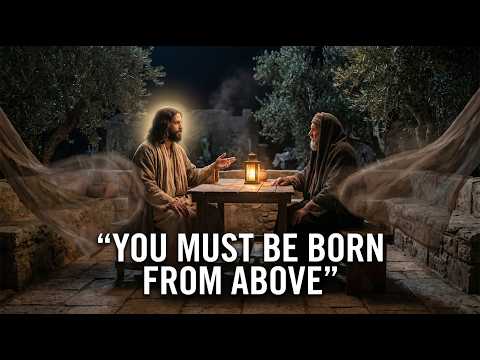
Nicodemus's most famous moment comes in John 3:1–21, when he approaches Jesus privately at night. Whether driven by caution, by a desire for uninterrupted conversation, or by both, he opens with genuine respect: 'Rabbi, we know that you are a teacher come from God, for no one can do these signs that you do unless God is with him' (John 3:2). In response, Jesus does not debate credentials — He cuts straight to the heart: 'Truly, truly, I say to you, unless one is born again he cannot see the kingdom of God' (John 3:3). Nicodemus's honest confusion — 'How can a man be born when he is old?' (John 3:4) — becomes the occasion for one of Scripture's most luminous declarations: 'For God so loved the world, that he gave his only Son, that whoever believes in him should not perish but have eternal life' (John 3:16). In Nicodemus, candor and truth-seeking shine even through hesitation.
A Lone Voice in the Sanhedrin
The second time Nicodemus appears, the atmosphere is far more hostile. The chief priests and Pharisees are frustrated that no one has arrested Jesus, and the Sanhedrin is moving against Him. Into this tense session, Nicodemus steps forward with a point of law: 'Does our law judge a man without first giving him a hearing and learning what he does?' (John 7:51). It is not yet a full-throated defense of Jesus, but it is a courageous one — his colleagues snap back with contempt, 'Are you from Galilee too? Search and see that no prophet arises from Galilee' (John 7:52). The rebuke is sharp, the risk real, and yet Nicodemus spoke. This small act of moral courage marks a man whose faith, though still forming, is quietly growing bolder.
At the Tomb: Courage Made Public
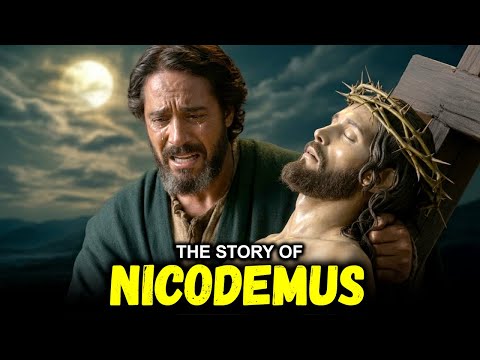
By the time Jesus is crucified, whatever remained of Nicodemus's caution appears to have broken. John 19:39 records that he came to assist Joseph of Arimathea in preparing the body of Jesus for burial, bringing 'a mixture of myrrh and aloes, about seventy-five pounds in weight.' This was no minor gesture — it was a public act, performed in the full view of Roman and Jewish authorities, at enormous personal and social cost to a man of his standing. The extravagance of the spices speaks to the depth of his devotion. He who had once come to Jesus by night now ministered to Him openly in the light of day.
A Disciple Indeed?
The New Testament tells us nothing further about Nicodemus after the burial scene. Later church tradition identifies him with various figures, but these accounts have no biblical support and should be received as tradition only. What the Gospel of John gives us is a carefully constructed portrait: a man who moved — slowly, honestly, at real cost — from private curiosity to public loyalty. There is every reason, as many commentators have noted, to conclude that he became a true disciple of Christ. His silence in the rest of Scripture is simply the silence of a man whose story John considered complete once it had reached its destination.
What Nicodemus Teaches Us
Nicodemus is a figure of great pastoral relevance. His story challenges the easy division of people into 'believers' and 'unbelievers' and invites a more patient view of the Spirit's work in human hearts. His night visit reminds readers that honest questions, even cautious ones, are welcomed by Jesus rather than dismissed. His progression — from seeker to quiet defender to open mourner — models a faith that deepens under pressure rather than collapsing. Above all, it is in the conversation with Nicodemus that Jesus delivers the theological heart of John's Gospel, suggesting that this unlikely Pharisee was, in God's providence, exactly the right audience for the world's most famous verse.
Key passages
See also
More illustrations of Nicodemus
1
_-_James_Tissot.jpg)
Source · AI-drafted from public-domain sources (Smith's 1884, Easton's 1897), synthesized + modernized; auto-verified for fidelity. Final gospel.bot review recommended.