Encyclopedia entry · Person
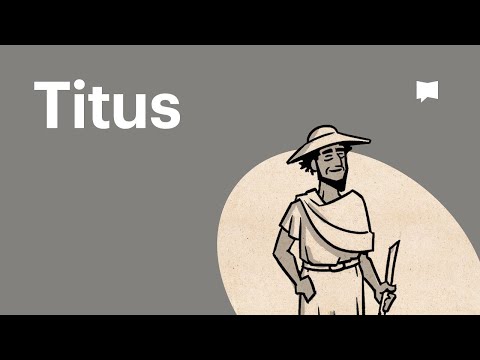
Titus
Curator's research file
Subject · person

Titus
Biblica Open Bible Map COLOR 51 Titus · Historical biblical maps
Identity
- Name meaning
- pleasing
Family
- Parent(s)
- —
- Spouse
- —
- Children
- —
- Tribe / people
- —
Era & origin
- Era
- 1st century AD
- Region
- —
- Contemporary of
- —
Role
- Role
- Paul's trusted companion and delegate; organizer of the Cretan church
- Notable for
- Titus was a Gentile Christian and one of Paul's closest associates, known for his faithful service as a missionary and church administrator.
Scripture
- First mention
- Galatians 2:1-3
- Most cited
- 2 Corinthians 8
Network
- Referenced by
- 51 entries
- Voices
- —
Titus's Early Association with Paul
Titus first appears in Paul's letters as a companion to Paul and Barnabas at Antioch, accompanying them to the Jerusalem Council around 49 AD. As a full Gentile (both parents non-Jewish), he became a test case for gospel freedom. Paul refused to have Titus circumcised (Galatians 2:3), making him a representative figure in the debate over whether Gentiles must adopt Jewish practices. This courageous stand by Paul protected the truth of the gospel for all believers (Galatians 2:5).
Titus's Missionary Work
After Paul's extended ministry at Ephesus, he sent Titus to Corinth on a delicate diplomatic mission: to address serious immoralities in the church and to organize a collection for poor believers in Jerusalem. When Paul anxiously awaited Titus in Troas, he was disappointed but found rest when Titus finally rejoined him in Macedonia with encouraging news (2 Corinthians 2:13; 7:6–7). Paul then sent Titus back to Corinth with the Second Epistle and trusted him to complete the relief offering (2 Corinthians 8:6).
Leadership in Crete
Paul left Titus in Crete to complete organizational work the apostle had begun. The letter to Titus reveals his substantial pastoral duties: appointing elders in every city (Titus 1:5), refuting false teachers (Titus 1:11), and maintaining sound doctrine. Paul instructed him to expect Artemas or Tychicus as a replacement, then to rejoin Paul at Nicopolis (Titus 3:12). Church tradition consistently associates Titus with Crete, claiming he served as the first bishop of the island and died there in old age, though Scripture provides no final confirmation of these details.
Later Years
Paul's final letter mentions Titus at Rome during Paul's second imprisonment, before sending him on missionary work to Dalmatia (2 Timothy 4:10). Beyond this reference, Scripture offers no account of Titus's death or final ministry, leaving his later life known only through tradition and inference from historical geography.
Key passages
See also
Source · AI-drafted from public-domain sources (Smith's 1884, Easton's 1897), synthesized + modernized; auto-verified for fidelity. Final gospel.bot review recommended.