Encyclopedia entry · Person
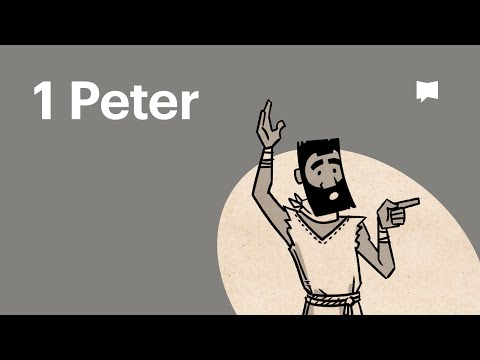
Peter
Curator's research file
Subject · person
_-_James_Tissot.jpg)
Peter
Brooklyn Museum - The First Denial of Saint Peter (Premier reniement de Saint Pierre ) - James Tissot · James Tissot
Identity
- Name meaning
- Rock or Stone (from Greek Petros; Aramaic Cephas)
Family
- Parent(s)
- —
- Spouse
- —
- Children
- —
- Tribe / people
- —
Era & origin
- Era
- First century AD
- Region
- —
- Contemporary of
- —
Role
- Role
- Apostle, fisherman, and foundational leader of the early church
- Notable for
- Peter, born Simon son of Jonah, was a fisherman from Bethsaida who became the most prominent of Jesus's twelve apostles.
Scripture
- First mention
- Matthew 16:16–18
- Most cited
- Acts 10
Network
- Referenced by
- 103 entries
- Voices
- —
From Simon to Cephas: The Call of a Fisherman
Peter's original name was Simon, meaning 'hearer,' and he was the son of a man named Jonah (Matthew 16:17). Raised in Bethsaida on the western shore of the Sea of Galilee, he worked as a fisherman alongside his younger brother Andrew, and was a business partner with James and John, sons of Zebedee—a partnership substantial enough to include hired servants (Mark 1:20). He likely owned or had use of a house in Capernaum large enough to host Jesus, the disciples, and crowds drawn by miracles and teaching. Peter was probably between thirty and forty years old when his call came. It was Andrew who first brought him to Jesus, and on that initial meeting Jesus looked at him and said, *'You are Simon the son of John. You shall be called Cephas'* (John 1:42)—Cephas being an Aramaic word equivalent to the Greek Petros, both meaning 'rock.' That first encounter did not immediately uproot him from his trade; he returned to fishing and waited for a clearer summons, which came dramatically on the Sea of Galilee when Jesus called him and his partners away from their nets for good (Luke 5:1–11).
First Among the Apostles
When Jesus formally appointed the Twelve, Simon—now bearing the name Peter publicly and almost exclusively—was listed first in every apostolic roll call (Matthew 10:2). This precedence was not merely ceremonial. Peter consistently spoke on behalf of the group, was singled out by Jesus in pivotal moments, and appears to have been recognized by everyone, friend and critic alike, as the apostles' leading voice. It was Peter who confessed, *'You are the Christ, the Son of the living God'* (Matthew 16:16), and received in return the promise that on this rock Jesus would build his church. Yet that same energy and boldness could curdle into presumption: moments after the great confession, Peter rebuked Jesus for predicting his suffering and was sharply answered, *'Get behind me, Satan! You are a hindrance to me'* (Matthew 16:23). The pattern repeated itself—soaring faith followed by startling failure—making Peter one of the most honestly human figures in the New Testament.
Denial, Resurrection, and Restoration
Peter's lowest moment came on the night of Jesus's arrest. Despite his passionate protestations of unfailing loyalty at the Last Supper, he denied knowing Jesus three times before the night was out—exactly as Jesus had predicted (Luke 22:34, 61). Yet the resurrection morning shows a man humbled but not destroyed. Peter and John ran to the tomb together; Peter was the first to step inside (John 20:6). Paul records that the risen Christ appeared to Peter before any of the other apostles ('he appeared to Cephas, then to the twelve,' 1 Corinthians 15:5). Significantly, in that early resurrection appearance he is called by his old name Simon, not Peter—as if the higher designation awaited a formal restoration. That restoration came at the Sea of Galilee, where Jesus three times asked Peter, 'Do you love me?' and three times commissioned him: 'Feed my sheep' (John 21:15–17). The threefold charge mirrored the threefold denial and publicly reinstated Peter to his calling.
Pentecost and the Birth of the Church
The first half of Acts belongs in large measure to Peter. On the Day of Pentecost, when the Spirit descended on the gathered believers, it was Peter who stood up, addressed the Jerusalem crowd, and preached the first great apostolic sermon, resulting in some three thousand baptisms (Acts 2:14–41). When the Jerusalem church sent representatives to confirm new believers in Samaria, it was Peter and John who went (Acts 8:14). Peter's healings—including the restoration of the paralyzed Aeneas and the raising of Tabitha—extended his ministry throughout Judea (Acts 9:32–42). The signal event of this period, however, was the baptism of Cornelius, a Roman centurion: through a vision, Peter came to understand that 'God shows no partiality' (Acts 10:34), and he baptized the first explicitly Gentile household. This act—the opening of the gospel to the nations—was, in many ways, the crowning achievement of Peter's recorded ministry.
Later Ministry and the Shadow of Paul
After a miraculous deliverance from Herod Agrippa's prison (Acts 12:1–17), Peter's story in Acts fades into the background as Paul's expands. The two men's relationship was complex: Paul records visiting Peter in Jerusalem for fifteen days shortly after his conversion (Galatians 1:18), and later confronted him publicly at Antioch when Peter's inconsistent behavior toward Gentile believers threatened the integrity of the gospel (Galatians 2:11–14). Peter's own letters show a man of theological depth who had absorbed and could articulate the meaning of what he had witnessed—urging believers to 'set apart Christ as Lord' and to live as 'a royal priesthood, a holy nation' (1 Peter 2:9; 3:15). He was probably active in building up churches across Palestine and may have visited Corinth. Early church tradition, though not the New Testament itself, associates the substance of Mark's Gospel with Peter's own oral preaching.
Martyrdom and Legacy
The New Testament hints at Peter's eventual death: Jesus told him cryptically, 'When you are old, you will stretch out your hands, and another will dress you and carry you where you do not want to go'—which John's Gospel explicitly identifies as signifying 'by what kind of death he was to glorify God' (John 21:18–19). The details of that death come from tradition, not Scripture. Early Christian writers, including Origen, record that Peter was crucified in Rome during the Neronian persecution (around AD 67–68), and that at his own request he was crucified upside down, feeling unworthy to die in the same manner as his Lord. The tradition that Peter and Paul together founded the church in Rome and both died there is attested by early ecclesiastical writers and is widely accepted as historically credible, though it cannot be established from the New Testament alone. Peter left two epistles bearing his name: 1 Peter is universally accepted in the church's tradition, while 2 Peter has been the subject of ongoing scholarly debate. His legacy is immense—apostle, preacher, failure, penitent, martyr, and rock.
Key passages
See also
More illustrations of Peter
2
_-_James_Tissot.jpg)

Source · AI-drafted from public-domain sources (Smith's 1884, Easton's 1897), synthesized + modernized; auto-verified for fidelity. Final gospel.bot review recommended.