Encyclopedia entry
Number
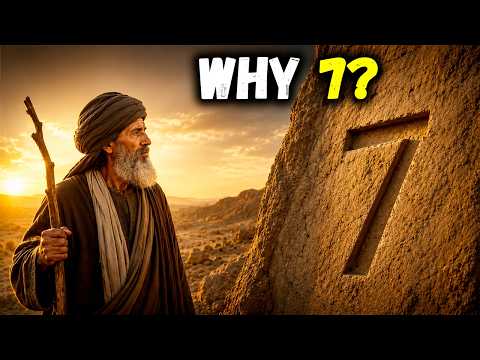
Like most Oriental nations, it is probable that the Hebrews in their written calculations made use of the letters of the alphabet. That they did so in post-Babylonian times we have conclusive evidence in the Maccabaean coins; and it is highly probable that this was the ease also in earlier times. But though, on the one hand, it is certain that in all existing MSS of the Hebrew text of the Old Testament the numerical expressions are written at length, yet, on the other, the variations in the several versions between themselves and from the Hebrew text, added to the evident inconsistencies in numerical statement between certain passages of that text itself seems to prove that some shorter mode of writing was originally in vogue, liable to be misunderstood, and in fact misunderstood by copyists and translators. These variations appear to have proceeded from the alphabetic method of writing numbers. There can be little doubt, however, that some at least of the numbers mentioned in Scripture are intended to be representative rather than determinative. Certain numbers, as 7,10,40,100, were regarded as giving the idea of completeness. Without entering into St. Augustine’s theory of this usage, we may remark that the notion of representative numbers in certain cases is one extremely common among eastern nations, who have a prejudice against counting their possessions accurately; that it enters largely into many ancient systems of chronology, and that it is found in the philosophical and metaphysical speculations not only of the Pythagorean and other ancient schools of philosophy, both Greek and Roman, but also in those of the later Jewish writers, of the Gnostics, and also of such Christian writers se St. Augustine himself. We proceed to give some instances of numbers used, (a) representatively, and thus probably by design indefinitely, or, (b) definitely, but, as we may say, preferentially, i.e. because some meaning (which we do not in all cases understand) was attached to them.
Read full account →↑
Seven as denoting either plurality or completeness, perhaps because seven days completed the week is so frequent as to make a selection only of instances necessary, e.g. seven fold (Genesis 4:24) seven times, i.e. completely, (Leviticus 26:24; Psalms 12:6) seven (i.e. many) ways, (28:25) Ten as a preferential number is exemplified in the Ten Commandments and the law of tithe. Seventy, as compounded of 7 X 10, appears frequently e.g. seventy fold. (Genesis 4:24; Matthew 18:22) Its definite use appears in the offerings of 70 shekels, (Numbers 7:13,19) ff,; the 70 elders, ch. (Numbers 11:16) 70 Years of captivity. (Jeremiah 25:11) Five appears in the table of punishments, of legal requirements, (Exodus 22:1; Leviticus 5:16; 22:14; 27:15; Numbers 5:7; 18:16) and in the five empires of Daniel. (Daniel 2:1) ... Four is used in reference to the 4 winds, (Daniel 7:2) and the so-called 4 corners of the earth; the creatures, each with 4 wings and 4 faces, of Ezekiel, (Ezekiel 1:5) ff.; 4 Rivers of Paradise (Genesis 2:10) 4 Beasts, (Daniel 7:1) ... and Reve 4:6 The 4 equal-sided temple-chamber. (Ezekiel 40:47) Three was regarded, by both the Jews and other nations as a specially complete and mystic number. Twelve (3X4) appears in 12 tribes 12 stones in the high priest’s breastplate, 12 apostles, 12 foundation-stones, and 12 gates. (Revelation 21:19-21) Lastly, the mystic number 666. (Revelation 13:18)
In the Bible
210
Verses where Number is named. Berean Standard Bible (public domain).
- 1 Chronicles 7:2
The sons of Tola: Uzzi, Rephaiah, Jeriel, Jahmai, Ibsam, and Shemuel, the heads of their families. In the days of David, 22,600 descendants of Tola were numbered in their genealogies as mighty men of valor.
- 1 Chronicles 7:9
Their genealogies were recorded according to the heads of their families—20,200 mighty men of valor.
- 1 Chronicles 7:40
All these were the descendants of Asher—heads of their families, choice and mighty men of valor, and chiefs among the leaders. The number of men fit for battle, recorded in their genealogies, was 26,000.
- 1 Chronicles 9:22
The number of those chosen to be gatekeepers at the thresholds was 212. They were registered by genealogy in their villages. David and Samuel the seer had appointed them to their positions of trust.
- 1 Chronicles 11:11
This is the list of David’s mighty men: Jashobeam son of Hachmoni was chief of the officers; he wielded his spear against three hundred men, whom he killed at one time.
- 1 Chronicles 16:19
When they were few in number, few indeed, and strangers in the land,
+204 more verses naming Number.
Scripture on Number
150
See all 150 +−
- Numbers 22 Samuel 241 Chronicles 71 Chronicles 211 Chronicles 231 Chronicles 27Ezekiel 4Revelation 13Genesis 4Leviticus 15Leviticus 26Numbers 14Numbers 26Joshua 4Judges 71 Samuel 61 Chronicles 252 Chronicles 262 Chronicles 30Job 1Job 21Job 38Psalms 105Isaiah 65Jeremiah 2Ezekiel 47Daniel 7Acts 1Acts 6Acts 11Acts 19Revelation 7Genesis 2Genesis 13Genesis 15Genesis 34Genesis 41Genesis 42Genesis 46Genesis 47Exodus 12Exodus 16Exodus 22Exodus 23Exodus 30Leviticus 5Leviticus 23Numbers 5Numbers 7Numbers 11Numbers 15Numbers 23Numbers 31Numbers 35Deuteronomy 4Deuteronomy 7Deuteronomy 16Deuteronomy 25Deuteronomy 26Deuteronomy 28Deuteronomy 32Joshua 11Judges 6Judges 211 Samuel 142 Samuel 22 Samuel 122 Samuel 211 Kings 31 Kings 181 Kings 201 Chronicles 91 Chronicles 111 Chronicles 161 Chronicles 222 Chronicles 122 Chronicles 292 Chronicles 35Ezra 1Ezra 2Ezra 3Ezra 6Ezra 8Nehemiah 7Esther 9Job 3Job 5Job 9Job 14Job 15Job 25Job 31Job 34Job 36Job 39Psalms 12Psalms 40Psalms 90Psalms 104Psalms 139Psalms 147Proverbs 7Song of Solomon 6Isaiah 21Isaiah 40Jeremiah 11Jeremiah 25Jeremiah 44Ezekiel 1Ezekiel 5Ezekiel 40Daniel 2Daniel 9Hosea 1Joel 1Nahum 3Matthew 18Mark 10Luke 5Luke 6Luke 22Luke 23John 5John 6John 21Acts 2Acts 4Acts 5Acts 7Acts 14Acts 16Acts 17Acts 20Romans 9Romans 111 Corinthians 112 Corinthians 101 Timothy 5Revelation 5Revelation 6Revelation 9Revelation 11Revelation 15Revelation 20Revelation 21
Entries that reference Number
1
Number references
18
Voices on Number
24
Surfaced by name match — accuracy varies by title clarity.


















Sources · Smith's Bible Dictionary (1884)
Public-domain text. Modernized only where archaic spelling impedes reading; original facts preserved. Verify against an authoritative modern reference before quoting.