
Encyclopedia entry
High priest
Disambiguation
The source enumerates 4 distinct subjects under High priest. Jump to one below, or read in order.
Aaron was the first who was solemnly set apart to this office (Ex. 29:7; 30:23; Lev. 8:12). He wore a peculiar dress, which on his death passed to his successor in office (Ex. 29:29, 30). Besides those garments which he wore in common with all priests, there were four that were peculiar to himself as high priest:
High priest (1)
#The “robe” of the ephod, all of blue, of “woven work,” worn immediately under the ephod. It was without seam or sleeves. The hem or skirt was ornamented with pomegranates and golden bells, seventy-two of each in alternate order. The sounding of the bells intimated to the people in the outer court the time when the high priest entered into the holy place to burn incense before the Lord (Ex. 28).
High priest (2)
#The “ephod” consisted of two parts, one of which covered the back and the other the breast, which were united by the “curious girdle.” It was made of fine twined linen, and ornamented with gold and purple. Each of the shoulder-straps was adorned with a precious stone, on which the names of the twelve tribes were engraved. This was the high priest’s distinctive vestment (1 Sam. 2:28; 14:3; 21:9; 23:6, 9; 30:7).
High priest (3)
#The “breastplate of judgment” (Ex. 28:6-12, 25-28; 39:2-7) of “cunning work.” It was a piece of cloth doubled, of one span square. It bore twelve precious stones, set in four rows of three in a row, which constituted the Urim and Thummim (q.v.). These stones had the names of the twelve tribes engraved on them. When the high priest, clothed with the ephod and the breastplate, inquired of the Lord, answers were given in some mysterious way by the Urim and Thummim (1 Sam. 14:3, 18, 19; 23:2, 4, 9, 11, 12; 28:6; 2 Sam. 5:23).
High priest (4)
#The “mitre,” or upper turban, a twisted band of eight yards of fine linen coiled into a cap, with a gold plate in front, engraved with “Holiness to the Lord,” fastened to it by a ribbon of blue.
To the high priest alone it was permitted to enter the holy of holies, which he did only once a year, on the great Day of Atonement, for “the way into the holiest of all was not yet made manifest” (Heb. 9; 10). Wearing his gorgeous priestly vestments, he entered the temple before all the people, and then, laying them aside and assuming only his linen garments in secret, he entered the holy of holies alone, and made expiation, sprinkling the blood of the sin offering on the mercy seat, and offering up incense. Then resuming his splendid robes, he reappeared before the people (Lev. 16). Thus the wearing of these robes came to be identified with the Day of Atonement.
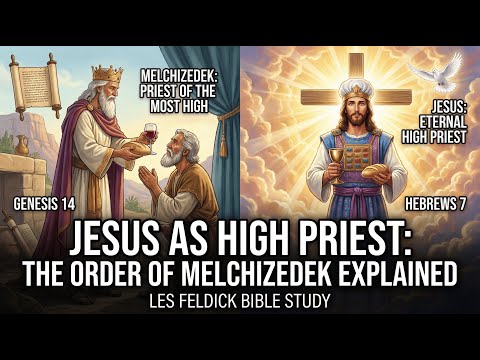
The office, dress, and ministration of the high priest were typical of the priesthood of our Lord (Heb. 4:14; 7:25; 9:12, etc.).
It is supposed that there were in all eighty-three high priests, beginning with Aaron (B.C. 1657) and ending with Phannias (A.D. 70). At its first institution the office of high priest was held for life (but comp. 1 Kings 2:27), and was hereditary in the family of Aaron (Num. 3:10). The office continued in the line of Eleazar, Aaron’s eldest son, for two hundred and ninety-six years, when it passed to Eli, the first of the line of Ithamar, who was the fourth son of Aaron. In this line it continued to Abiathar, whom Solomon deposed, and appointed Zadok, of the family of Eleazar, in his stead (1 Kings 2:35), in which it remained till the time of the Captivity. After the Return, Joshua, the son of Josedek, of the family of Eleazar, was appointed to this office. After him the succession was changed from time to time under priestly or political influences.
In the Bible
80
Verses where High priest is named. Berean Standard Bible (public domain).
- 2 Chronicles 24:6
So the king called Jehoiada the high priest and said, “Why have you not required the Levites to bring from Judah and Jerusalem the tax imposed by Moses the servant of the LORD and by the assembly of Israel for the Tent of the Testimony?”
- 2 Chronicles 24:11
Whenever the chest was brought by the Levites to the king’s overseers and they saw that there was a large amount of money, the royal scribe and the officer of the high priest would come and empty the chest and carry it back to its place. They did this daily and gathered the money in abundance.
- 2 Chronicles 34:9
So they went to Hilkiah the high priest and gave him the money that had been brought into the house of God, which the Levites who guarded the doors had collected from the people of Manasseh and Ephraim, from all the remnant of Israel, from all Judah and Benjamin, and from the people of Jerusalem.
- 2 Kings 12:10
Whenever they saw that there was a large amount of money in the chest, the royal scribe and the high priest would go up, count the money brought into the house of the LORD, and tie it up in bags.
- 2 Kings 22:4
“Go up to Hilkiah the high priest and have him count the money that has been brought into the house of the LORD, which the doorkeepers have collected from the people.
- 2 Kings 22:8
Then Hilkiah the high priest said to Shaphan the scribe, “I have found the Book of the Law in the house of the LORD!” And he gave it to Shaphan, who read it.
+74 more verses naming High priest.
Scripture on High priest
47
See all 47 +−
- Numbers 35Haggai 1Acts 23Hebrews 4Hebrews 5Exodus 28Exodus 29Leviticus 161 Kings 22 Kings 222 Chronicles 24Nehemiah 3Haggai 2Zechariah 3Luke 22John 11Hebrews 8Leviticus 8Leviticus 21Numbers 3Joshua 201 Samuel 21 Samuel 142 Samuel 52 Kings 122 Kings 232 Chronicles 34Nehemiah 13Zechariah 6Mark 2Acts 4Acts 7Acts 9Acts 22Acts 24Acts 25Hebrews 2Hebrews 3Hebrews 6Hebrews 7Hebrews 10Hebrews 13
Entries that reference High priest
3
High priest references
15
Voices on High priest
21
Surfaced by name match — accuracy varies by title clarity.
































Sources · Easton's Bible Dictionary (1897)
Public-domain text. Modernized only where archaic spelling impedes reading; original facts preserved. Verify against an authoritative modern reference before quoting.