Encyclopedia entry · Person
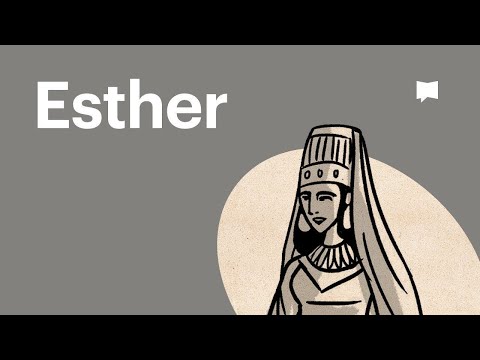
Esther
Curator's research file
Subject · person

Esther
Esther Before the King · Gustave Doré
Identity
- Name meaning
- Star (Persian: satarah); also associated with 'secret' or 'hidden.' Her Hebrew name Hadassah means 'myrtle.'
Family
- Parent(s)
- —
- Spouse
- —
- Children
- —
- Tribe / people
- —
Era & origin
- Era
- Persian period, c. 479 BC (reign of Ahasuerus/Xerxes I)
- Region
- —
- Contemporary of
- —
Role
- Role
- Jewish queen of Persia and deliverer of her people
- Notable for
- Esther was a Jewish woman of extraordinary beauty, courage, and faith who rose from orphan exile to become queen of the Persian Empire.
Scripture
- First mention
- Esther 2:7
- Most cited
- Esther 2
Network
- Referenced by
- 117 entries
- Voices
- —
Background and Identity
Esther's Hebrew name was Hadassah, meaning 'myrtle,' but she is known to history by her Persian name, which derives from the word satarah, meaning 'a star'—a fitting name for one whose influence would shine at a critical moment. She was the daughter of Abihail, a Benjamite (Esther 2:15), and was left an orphan at a young age. Her family had remained in Persia rather than taking advantage of the permission Cyrus granted the Jewish exiles to return to Jerusalem, and so Esther grew up in the heart of the empire, raised by her older cousin Mordecai, who held an office in the royal household at Shushan (Esther 2:7). Her dual identity—Jewish by blood and heritage, Persian by upbringing and culture—would prove decisive for the drama that unfolded.
Rise to the Throne
When King Ahasuerus—widely identified with the Xerxes of Greek historical records—dismissed Queen Vashti, a search was conducted across the empire for a new queen. Esther was brought into the royal harem along with many other young women, and she concealed her Jewish identity on Mordecai's instruction (Esther 2:10). Her character and bearing made an immediate impression: 'she obtained favour in the sight of all them that looked upon her' (Esther 2:15). The king chose her above all the others, and Esther became queen of Persia—though Ahasuerus remained unaware of her race and parentage.
The Threat of Haman
The crisis that would define Esther's life arose when Haman the Agagite, the king's prime minister, grew furious that Mordecai refused to bow to him. Rather than punishing Mordecai alone, Haman persuaded the king to issue a decree authorizing the extermination of every Jew throughout the Persian Empire (Esther 3:8–9). The decree was sealed with the king's ring and sent to every province. Mordecai and the Jewish community fell into mourning, fasting, and prayer. The threat was not merely political—it was genocidal, aimed at the complete destruction of the covenant people.
Esther's Courage and Intercession
Mordecai urged Esther to approach the king on behalf of her people, and she initially hesitated: to enter the king's inner court without being summoned was punishable by death unless the king extended his golden scepter (Esther 4:11). Mordecai's reply cut to the heart of her calling—he warned that her own life was not safe regardless, and asked whether she had not come to her royal position 'for such a time as this' (Esther 4:14). Esther's response revealed her deep faith and resolve: she called for three days of fasting among all the Jews, and then declared, 'if I perish, I perish' (Esther 4:16). She approached the king, found favor, and with characteristic shrewdness hosted two banquets before presenting her petition—a model of both courage and wisdom.
Deliverance and Its Aftermath
At the second banquet, Esther revealed Haman's plot and her own Jewish identity to the king (Esther 7:3–6). Ahasuerus, enraged, ordered Haman hanged on the very gallows Haman had constructed for Mordecai (Esther 7:9–10). A second decree was issued allowing the Jews to defend themselves, and the threatened destruction was turned back. Mordecai was elevated to Haman's former position of authority. The deliverance Esther secured, traditionally dated around 479 BC—the same year as the Greek victories at Plataea and Mycale—came approximately fifty-two years after the initial return of exiles from Babylon.
Legacy and Character
Esther established the annual feast of Purim, observed on the 14th and 15th of Adar, so that every generation of Jewish people would remember this remarkable deliverance (Esther 9:26–28). Secular history makes no mention of either Esther or Vashti by these names, and the precise identification of Ahasuerus with Xerxes I remains a matter of scholarly discussion rather than settled record. Scripture presents Esther as a woman of deep piety, faith, patriotism, and caution joined with resolution—dutiful to Mordecai, obedient to godly counsel, and willing to sacrifice personal safety for the sake of her people. Christian readers have long seen her story as a picture of God's hidden providence: working through ordinary human courage and fidelity to preserve the people through whom blessing would come to the world.
Key passages
See also
More illustrations of Esther
1

Source · AI-drafted from public-domain sources (Smith's 1884, Easton's 1897), synthesized + modernized; auto-verified for fidelity. Final gospel.bot review recommended.